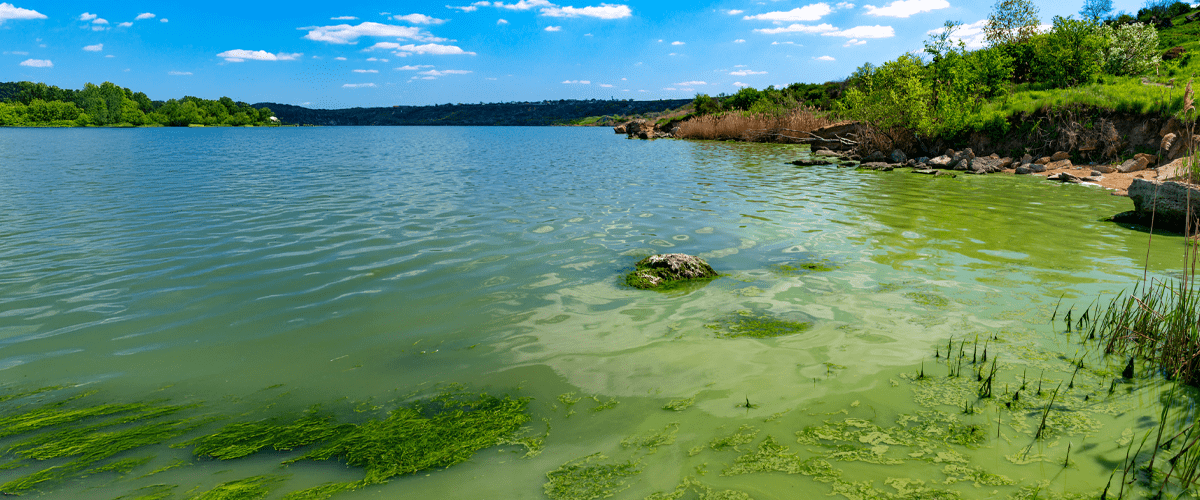

August 21, 2025 – Harmful algal blooms (HABs) — commonly known as red tides or toxic algae — are increasingly affecting lakes, rivers and coastal waters. These blooms can release powerful toxins that harm pets, people, livestock and wildlife. With climate change and water pollution fueling their growth, understanding how to recognize and prevent exposure to these dangerous organisms is more important than ever.
What Are Algae? Understanding These Diverse Water Organisms
The term “algae” applies to a wide range of organisms that live in water. This includes certain bacteria, protists, fungi and archaea — organisms that share two key traits: living in water and producing oxygen through photosynthesis. Algae can range in size from microscopic bacteria to massive kelp forests.
Algae play vital roles in ecosystems:
They produce roughly half the oxygen in Earth’s atmosphere.
They absorb carbon dioxide efficiently.
They are being explored for use in biofuels.
Most algae are harmless. However, under certain environmental conditions, some species produce harmful toxins that pose risks to humans and animals.
What Causes Harmful Algal Blooms (HABs)?
HABs occur when environmental conditions promote rapid algae growth. Key contributors include:
These conditions increase algae populations, some of which produce dangerous toxins. Climate change is intensifying the problem, causing blooms to become more frequent, longer-lasting, and wider in range.
Types of Harmful Algae and Their Toxins
Different types of algae produce different toxins. Many are grouped under the term "red tide," though their appearance and effects vary.
| Organism | Water Type | Color | Toxin | Target Tissue | Health Effects |
| Alexandrium sp | Salt | Red or Brown | Saxitoxins | Nervous and Musculoskeletal Systems | Paralytic shellfish poisoning, paralysis, death |
| Karenia brevis | Salt | Red | Brevetoxins | Nervous and Respiratory Systems | Gastrointestinal signs, muscle cramps, seizures, paralysis, respiratory difficulty |
| Pseudonitzschia | Salt | Red or Brown | Domoic Acid | Nervous System | Amnesiac shellfish poisoning, vomiting, diarrhea, confusion, seizures, memory loss, death |
| Microcystis | Fresh | Blue-Green | Microcystin | Liver | Gastrointestinal signs, liver damage |
(Adapted from National Institute of Environmental Health Sciences)
How People and Animals Are Exposed to Algal Toxins
Toxins are most often ingested through:
Common Symptoms of Algal Toxin Exposure in Pets and Animals:
Symptoms may appear within hours, but in some cases, delays of several days are reported. If you suspect exposure, contact your veterinarian immediately — even if symptoms haven’t appeared. A tiny amount of algal toxin can still cause serious illness.
How to Prevent Harmful Algal Bloom Exposure
Prevention is the best defense:
To explore more about waterborne illnesses and other animal health threats worldwide, check out our podcasts, stay updated with the Golden Retriever Lifetime Study, and discover how you can support the Foundation’s mission to protect the animals we care about.
Additional Resources