
February 27, 2025 – Dr. Aude Castel and colleagues at the University of Montreal wanted to learn more about pain management in cats and study the associated brain activity but were faced with a tough puzzle – how do you measure brain waves (as a marker of neurons activity) in awake cats?
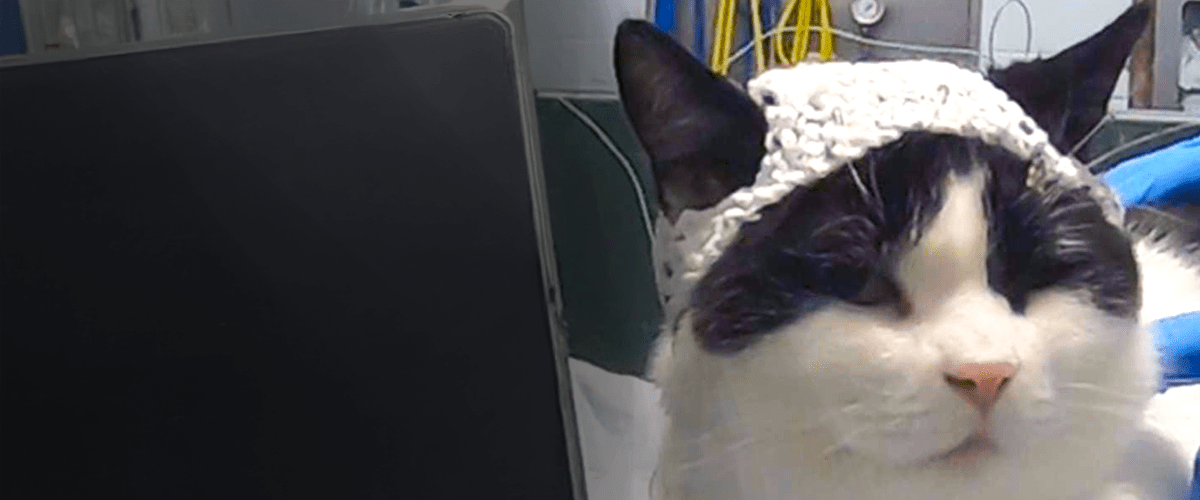
The answer – crochet them a hat.
Dr. Castel studies pain in cats, a tricky subject when it comes to objective measurement. Cats are notoriously good at hiding illness, and pain is no exception. However, lots of research suggests that cats suffer from many of the same painful conditions as dogs, including osteoarthritis.
And as any cat pet parent can tell you, giving a cat medication (or doing anything that wasn’t their idea!) can be challenging and frustrating.
Dr. Castel’s Foundation-funded project is leveraging information collected from people suffering from painful conditions. Research shows that exposure to pleasant stimuli – like well-loved music, or a pleasant smell – lessen people’s perception of pain. Dr. Castel wanted to see if something similar occurs in cats and if so, are there actions cat owners can take to help alleviate pain in their furry companion without the use of medication.
One way of measuring the effect of different stimuli on the pain centers in the brain is to use a technique known as electroencephalography or EEG. Electrodes are placed on the head and patients are exposed to different stimuli. The result is an objective measurement that can be used to evaluate and compare different treatments. The problem is that to be effective, a patient needs to be awake, and the electrodes need to stay put. But dangling wires in front of a cat is more enticing than catnip!
“Cats being cats, they love to chew these little wires, they love to play even if they're older,” said Dr. Castel. “However, we needed to find a way to be able to record the activity with minimal sedation or no sedation because the minute the animal is sedated it's going to affect their brain activity, and we won't be able to determine what's real and what is due to the sedation.”
The team saw that caps are sometimes used in people and after a quick internet search (and recruiting students who knew how to crochet), the team created their special hats. It took a little training, but the cats quickly adapted to their headgear and the team is hard at work collecting data. The team is using smells and different color lights, interventions that would be easy for owners and veterinarians to implement.
The team has attracted attention from veterinary scientists around the world, both for their study and for their hats! “This research can improve our diagnosis and understanding of pain,” added Dr. Castel. “The caps could also help veterinarians do other research where EEGs are needed.”
Science to Save Animals Starts with YOU!
Innovative animal health research takes vision as well as financial investment. That’s why Morris Animal Foundation, with the generous support of our donors, continues to fund this important work to change the odds for animals suffering from diseases and painful health conditions. DONATE TODAY and support critical science to save the animals you love!